LAS VEGAS, NV — St. Thomas is a Nevada ghost town with a rare history: it was swallowed by Lake Mead after Hoover Dam began filling in 1935, then exposed again when the reservoir dropped decades later.
The town began in 1865 as a Mormon settlement near the Muddy River. At its peak, about 500 people lived there, even though the community never had electricity or indoor plumbing. What survives now is enough to trace streets, foundations, and the outline of a once-working desert town.
What St. Thomas Was
St. Thomas sat in the desert as a practical farming settlement, not just a cluster of ruins. Mormon settlers believed the land near the Muddy River could be irrigated, and they built systems to turn dry ground into farmland.
The town grew into a full community with a school, post office, stores, a church, and other businesses. Its later fame comes from the fact that it was not abandoned in the usual way. Instead, it was deliberately cleared because a much larger federal water project was about to cover the valley where it stood.
That makes the site unusually legible today. When the ground is exposed, visitors can still read the town’s layout in the remains of streets and foundations.
How Historians Know
Much of what is known about St. Thomas comes from the town’s physical remains and the basic historical record of its removal. The article notes that the site’s streets, foundations, and building traces became visible again as Lake Mead fell, making the ruined town easy to identify on the ground.
Its timeline is anchored by the founding in 1865, the approval of Hoover Dam by Congress in 1928, the start of Lake Mead filling in 1935, and the departure of the last resident in June 1938. Those dates show how the town’s disappearance happened in stages rather than all at once.
The visibility of the site today has helped confirm how intact the town’s plan remains after decades underwater.
How It Disappeared
St. Thomas was not destroyed by fire, war, or a single disaster. It was erased by a federal dam project. Once Hoover Dam was approved, Lake Mead was planned as a reservoir to store water for the fast-growing Southwest, and the valley holding St. Thomas was destined to be flooded.
Residents were compensated and gradually left. Lake Mead began filling in 1935, but the town’s final resident did not leave until June 1938, when the water was already close to reaching the settlement.
Before the flood, the town had already lost some of its earliest settlers after a tax dispute over whether the land belonged to Nevada or Utah. That detail adds to the sense that St. Thomas was shaped by boundaries and water long before it disappeared beneath the reservoir.
What Visitors See Today
St. Thomas reappeared in 2002 when Lake Mead’s water level fell far enough to uncover it again. Since then, the site has been accessible at times when conditions allow, giving visitors a chance to walk the old streets and study the remains on the reservoir floor.
What they see is not a rebuilt attraction but the original footprint of the town: foundations, building remnants, and a layout still recognizable after decades underwater. The exposed ruins are a reminder that the reservoir was built to bury the settlement, yet drought and low snowpack have repeatedly pulled it back into view.
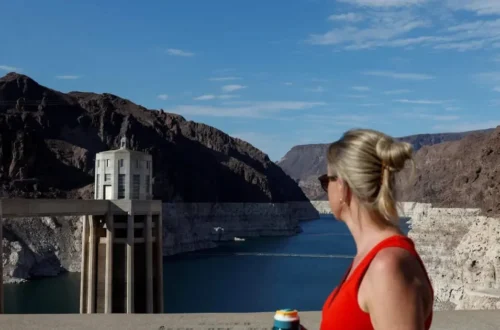
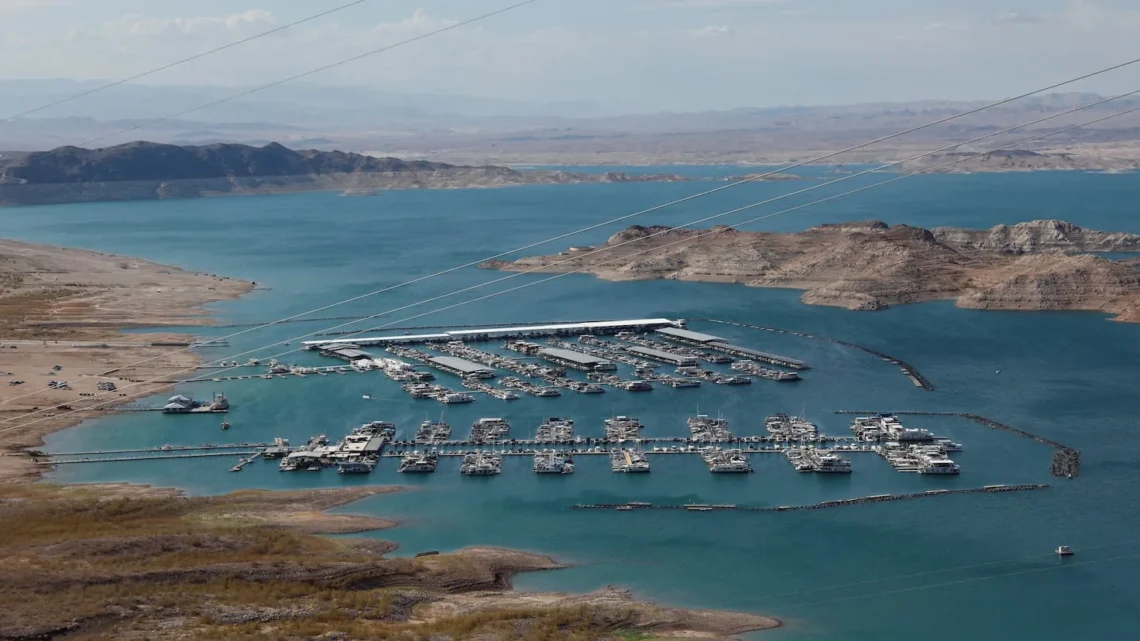
Lake Mead has since fallen to a new record low, leaving St. Thomas once more visible as one of the clearest ghost towns in the American West.
More of America's buried past, on LSM Spartan Scroll.