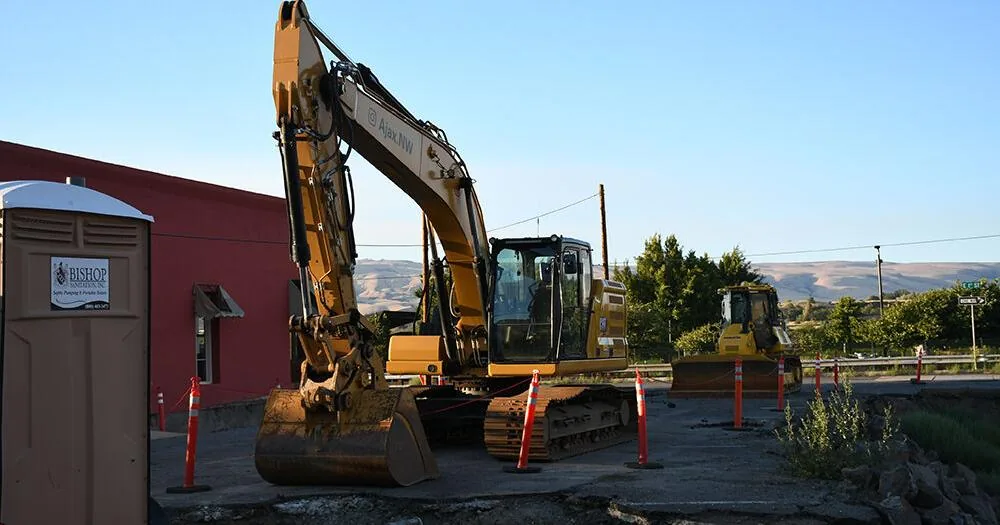
THE DALLES, OR — A downtown street reconstruction in The Dalles was interrupted in March when crews uncovering a retaining wall ran into an unidentified archaeological feature tied to Native American history.
The discovery is still being kept vague, but it has already pushed the First Street Streetscape project into a more expensive phase of recovery work. City officials say the added archaeology is necessary before construction can move ahead again, and the total project cost is now nearing $6 million.
What The Site Is
The find sits in a corridor between Washington and Court streets, under and around the area where a new retaining wall is going in. Workers stopped immediately after the feature appeared, then covered the excavation area with steel plates and built walls around it for temporary protection.
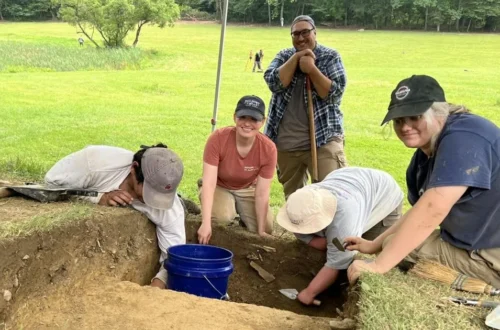
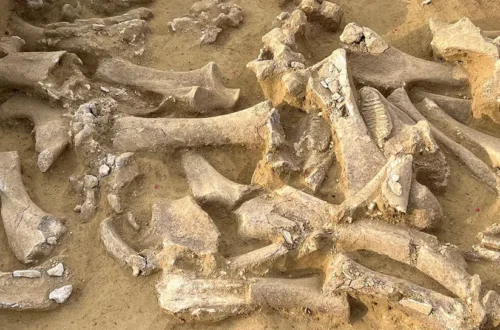
Officials have said the site includes historic artifacts such as bottles and other material, along with evidence of Indigenous presence. The archaeological area was described as two 1-by-1-meter excavation units. Oregon law keeps the exact location of archaeological sites confidential, so the city and its consultants are not sharing more detail while the spot remains exposed to construction traffic.
How It Was Studied
The Dalles is working with Archaeological Investigations Northwest, or AINW, to handle the required data recovery. City staff, engineers, and AINW representatives Jo Reese and Nicholas Smits discussed the problem before the council approved more funding on July 27.
Oregon’s State Historic Preservation Office requires recovery work before construction can continue. That process includes digging, processing, cataloging, specialist analysis, museum curation, and reporting. AINW has also secured an updated archaeological permit on an expedited basis, allowing the work to move forward once the recovery requirements are met.
How The Project Changed
The retaining wall was being built as part of the city’s long-running First Street Streetscape project, which includes roadway and pedestrian upgrades on First Street and nearby intersections. After the discovery, staff tried to raise the wall design to avoid disturbing the feature, but the adjustment was only possible by inches before structural integrity would have been compromised.
The council approved a fifth amendment to the service agreement with AINW and added $146,955, bringing the project’s total to nearly $6 million. Archaeology now makes up 14% of the overall cost. Council members said they wanted only the minimum recovery required by law and urged city staff to restart construction quickly and coordinate work so delays do not spread further.
Why It Matters Today
For now, the discovery has become a lesson in how modern building work can run into protected traces of older communities. Reese said the firm limits what it says publicly to help prevent illicit digging, and the city echoed that caution while the site remains vulnerable.
Once the retaining wall and backfill are in place, the area should be physically safer and more information may be shared. City officials say the goal is not an open-ended excavation, but the smallest recovery needed to satisfy state law and let Ajax Northwest resume work on First Street.
More of America's buried past, on LSM Spartan Scroll.