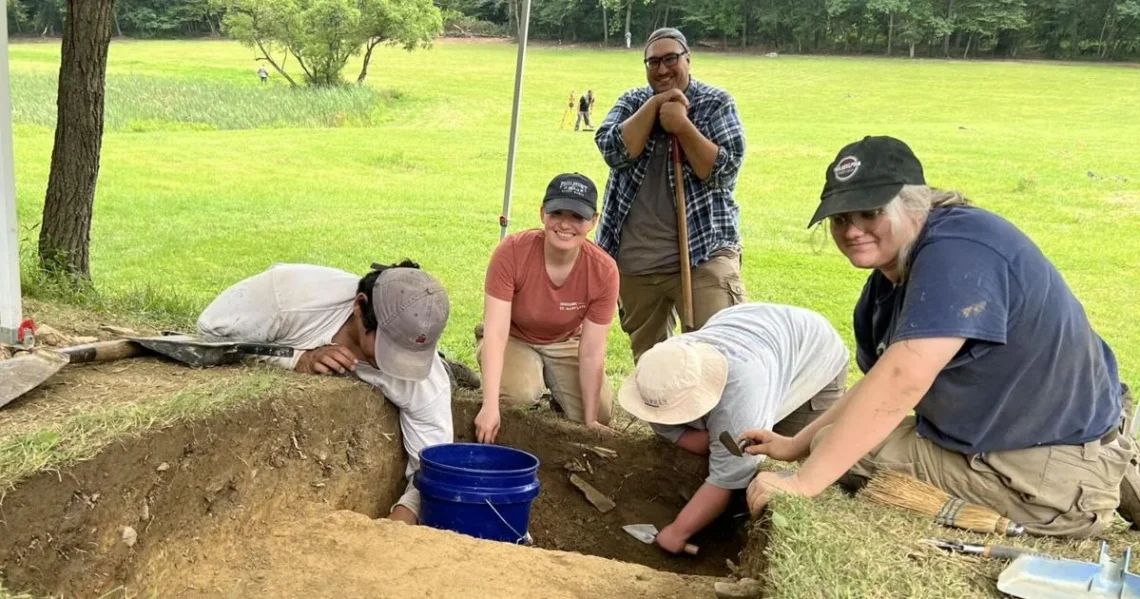
LIGONIER, PA — The Friendly Fire Incident at Fort Ligonier is a lost French and Indian War battlefield tied to Nov. 12, 1758, when George Washington was nearly killed in a mistake between allied Virginia troops. Archaeologists announced the site’s discovery in July 2025 after decades of searching.
The story rests on a hard number: around 12 to 16 men were killed in the clash, including two officers. The battlefield later became important not only because Washington survived, but because evidence from the field helped push Gen. John Forbes toward his final advance on Fort Duquesne.
What The Site Is
The battlefield sits on private land near Fort Ligonier, along the old Forbes Road corridor in southwestern Pennsylvania. It is not open to the public, in part because it is treated as a burial ground for the men who died there.
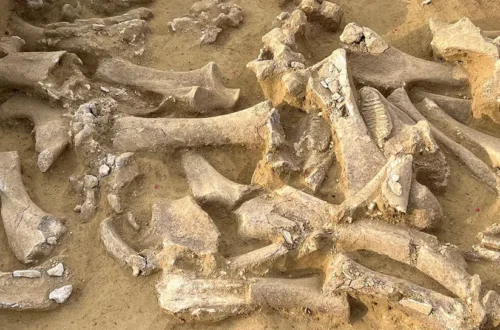
Researchers say the fighting happened about 2 miles from Fort Ligonier, in fog and fading light. Today, the site remains a quiet field, but the ground still holds bullets, buttons, buckles, and other evidence from the 1758 clash and a later 19th-century farm that occupied part of the property.
That mix makes the place unusually layered. It is both an 18th-century military landscape and a working archaeological site, where the shape of the battlefield is still being pieced together from scattered finds and terrain clues.
How Researchers Know
Much of what is known comes from repeated archaeological fieldwork, including five straight summers of digging by Fort Ligonier and partner teams. The work has included metal detecting, surveying, excavating, mapping, and soil studies.
Archaeologists have recovered lead musket balls, buttons, a flintlock from a British Brown Bess musket, and even a King George II English halfpenny. Some of the lead balls are flattened from impact, giving direct physical proof of combat activity. Earlier isotope analysis was also used to trace the source of some ammunition.
This year, geomorphologist Taylor Blackman drilled bore holes to study soil depth and composition, while veterans and graduate students helped define battlefield boundaries. The evidence does not rewrite the event, researchers say, but it sharpens the location, movement, and tempo of the fight.
How It Unfolded
The incident grew out of Forbes’s 1758 campaign to take Fort Duquesne, then held by the French at the Forks of the Ohio. Forbes had brought roughly 6,000 British troops and colonial militia across Pennsylvania on a new road, after earlier plans and attacks slowed his advance.
By Nov. 11, he had chosen to halt for winter quarters at the Post at Loyalhanna. The next day, Col. George Mercer led Virginians toward another possible raid on Fort Ligonier, and Washington brought about 500 volunteers to help. In the dark, each group mistook the other for the enemy and opened fire.
Washington later tried to stop the shooting by moving along the line and knocking guns upward. The aftermath left dead and wounded men on the ground, but the captured stragglers also exposed enough weakness at Fort Duquesne to change Forbes’s decision.
Why It Matters Today
The clash is now presented as a prelude to the American Revolution because it shaped Washington’s military education before 1775. Historians quoted in the story argue that the French and Indian War taught him how unpredictable war could be, and why he was later suited for command.
Visitors cannot walk the battlefield itself, but they can learn about it at Fort Ligonier Museum. A nine-minute film called Lost and Found shows the event, while Washington’s handwritten “Remarks” and recovered artifacts are on display in the George Washington Gallery.
The museum’s broader exhibit, To Rise and Fight Again: The Road to Revolution Begins at Fort Ligonier, connects the 1758 fort to later Revolutionary War figures and lets visitors symbolically switch from a British commission to a Continental Army commission. For researchers, every new find still adds another piece to the story.
More of America's buried past, on LSM Spartan Scroll.