
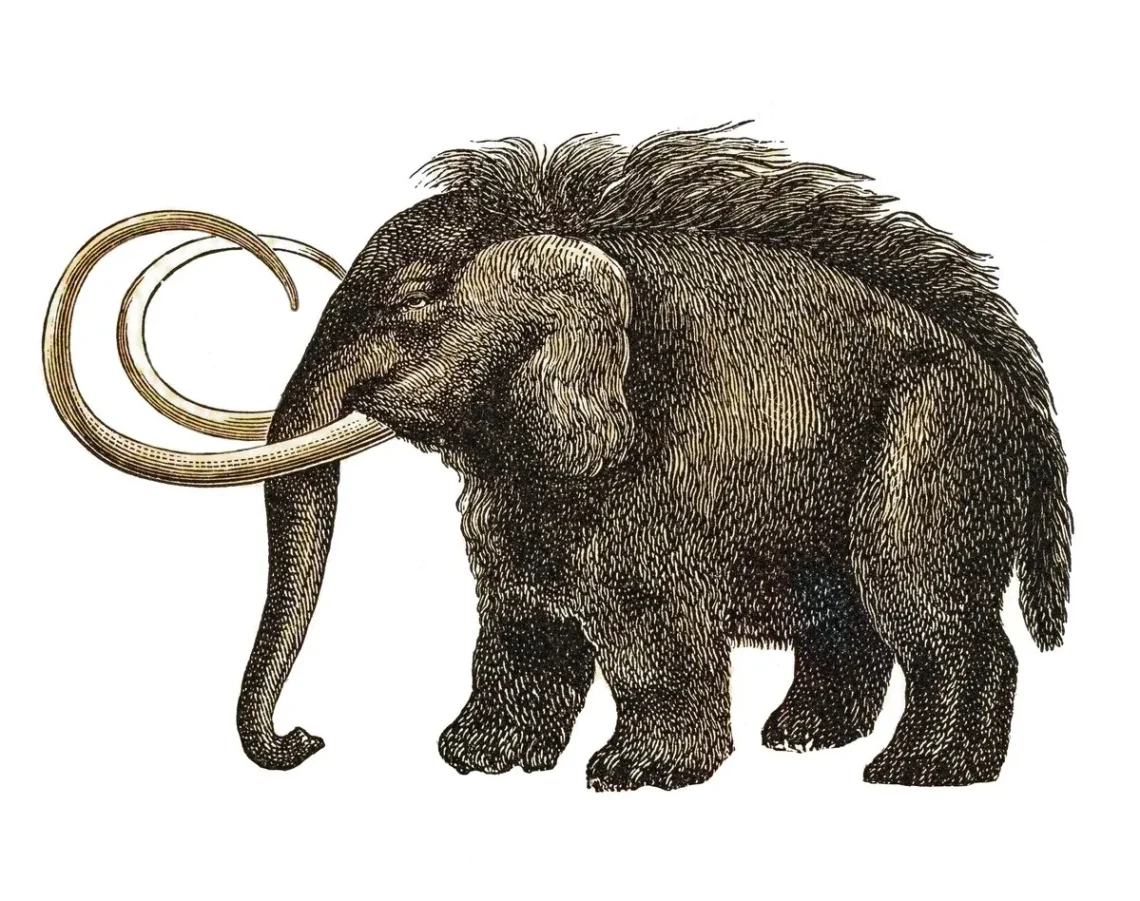
LOS ANGELES, CA — The La Brea Tar Pits preserve one of the clearest Ice Age predator scenes in North America. In the sticky deposits of what is now Los Angeles, researchers have found the bones of dire wolves, cave lions, giant short-faced bears and mammoths caught in the same ancient system.
Those remains help show that mammoths were not safe simply because they were huge. At La Brea, isotope analyses of recovered bones suggest that dire wolves competed with sabre-toothed cats and American lions for the same prey, including Columbian mammoths and American mastodons.
What The Site Is
La Brea is not a single skeleton or a lone kill site. It is a natural trap where asphalt seeped up through the ground and held onto animals that stepped in too deeply or lingered around a carcass.
Because the pit kept collecting bodies over a long span of time, it became a crowded record of Ice Age life. The site preserves evidence of predators, scavengers and herbivores that once shared western North America, and mammoths are part of that larger picture.
The La Brea finds include not only mammoths but also dire wolves and giant short-faced bears. That combination matters because it shows mammoths were embedded in a living food web, not just standing apart as isolated giants.
How Researchers Know
Much of what is known about the site comes from analyses of bones recovered from the tar. Researchers have used isotope studies to work out what some of the predators were eating and which animals they overlapped with in the same environment.
Those studies point to competition among dire wolves, sabre-toothed cats and American lions for prey that included Columbian mammoths and American mastodons. The bones themselves provide the key evidence, along with the marks and chemical signatures preserved in them.
The site has also been used to compare mammoth interactions across North America. That helps researchers separate what is directly visible in the fossil record from what can only be inferred, such as whether a predator hunted a mammoth or scavenged one after death.
How They Ended Up There
The story at La Brea is one of repeated entrapment. Animals drawn to water, carrion or other animals in trouble could become stuck themselves, turning a single tar seep into a long-running death trap.
That is why the site preserves so many different species together. It does not show one dramatic moment so much as repeated encounters between predators, scavengers and large herbivores over time. Mammoths were part of that cycle, and their presence helps explain why the site is so important.
Some predators may have hunted mammoths directly, while others may have fed on carcasses or competed for the same animals. The evidence does not always resolve that question, but it does show that mammoths were vulnerable once they were injured, weakened or dead.
What It Means Today
Today, La Brea remains one of the most useful windows into Ice Age America. It shows mammoths not as distant symbols, but as animals living among wolves, bears and big cats in a landscape full of risk.
For researchers, the site offers rare evidence of how predators shared prey. For visitors, it brings that world into focus through actual bones rather than imagination alone. The remains of mammoths and their hunters make the ancient food web feel immediate and local.
That is why La Brea still matters. It captures the moment when the largest land animals of the age met the strongest hunters and scavengers around them, and it preserves the proof in one of the most famous fossil sites in the United States.
More of America's buried past, on LSM Spartan Scroll.