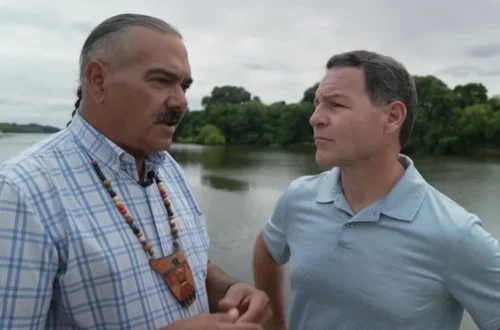
MILTON, FL — Santa Rosa County schools are rolling out a Native American Studies curriculum this fall, making it the first program of its kind in Florida. The lessons were developed with members of the Santa Rosa Band of the Lower Muscogee Chief Sky Horse, also known as Chief Dan Helms, and other community partners.
The district says the project took about 1½ years to build. It is designed to teach students about Native American culture, contributions, and influence through stories, language, farming, and digital tools, rather than through stereotypes that have long flattened the region’s history.
What The Curriculum Includes
The curriculum is a homegrown classroom resource built for Santa Rosa County students, but its creators say it reaches beyond one district. It includes units on Pre-European Contact, European Colonialism and American Founding, Pre-Removal, Post-Removal, Connections and Thought Lines, and Myths and Misconceptions.
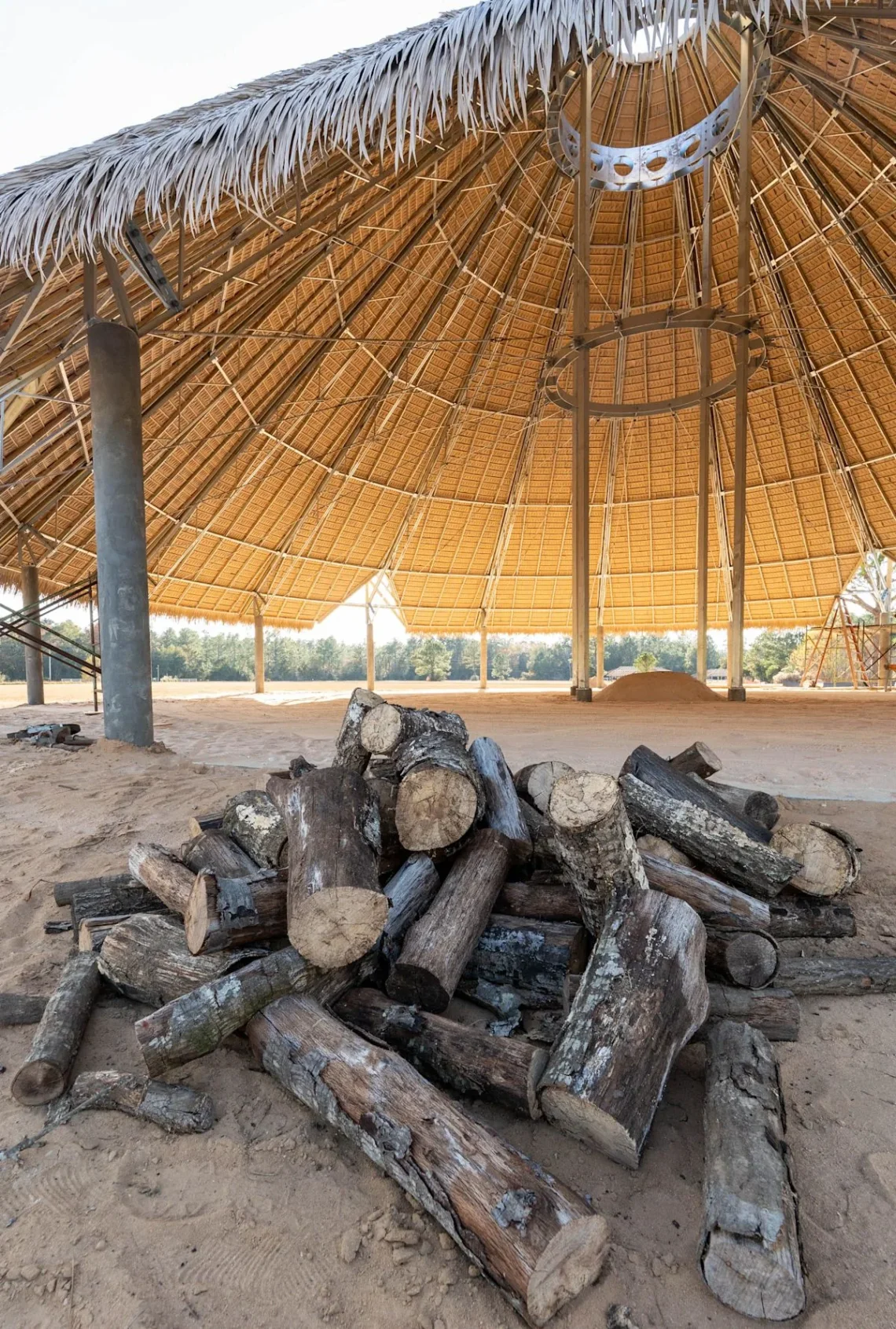
Students can also use virtual reality goggles to move around a simulated version of the Lower Muscogee’s 96-acre tribal grounds, visit the Round House, and examine artifacts up close without leaving school. Another piece of the program lets children plant and grow the three-sister crops — corn, beans and squash — while learning about planting seasons, crop rotation, weather patterns, and storm forecasting.
How It Was Built
The curriculum grew out of a sixth-grade field trip last year to the Lower Muscogee tribal lands and museum in Milton. Amy Parker, Santa Rosa County District Schools’ Social Studies, World Languages and ESOL coordinator, said students arrived with distorted expectations shaped by popular images of Native people.
That reaction convinced the district there was a need for something more grounded. Parker said the district worked with Muscogee members, University of West Florida Historic Trust staff, UWF Honors College students, historian Farris Powell, and teachers Elizabeth Cunningham, Justin King, Jackie Sines, Piper Singletary and Theresa Yankovoy. Sixth-graders in Avalon Middle School’s gifted program also helped create the 3-D Minecraft village used with younger students.
From Erasure To Renewal
Chief Dan Helms said the project was meant to humanize Native Americans and correct the way they have often been portrayed in books, films and television. He said the lessons highlight the history of the Southeastern United States, which he believes has been underrepresented in American education.
During the development process, Helms and other tribal members visited schools to share Muscogee history and language. He said students picked up the words quickly, and hearing the language in school hallways was a powerful sign that the material was landing in a new way.
Helms also connected the effort to a broader history of educational erasure, saying Native culture was pushed aside over generations after the Indian Removal era. He described the curriculum as an attempt to use education to revitalize what earlier systems tried to make invisible.
What It Means Now
For the district, the curriculum is meant to fit into history, science, English Language Arts, and other subjects, not sit apart as a one-off unit. Parker said the stories and legends are voiced by Lower Muscogee members, giving the lessons an immediacy that textbooks alone rarely provide.
Helms said the project also changed his own thinking after a student asked him what mattered most about Native American culture. His answer pointed to a basic idea running through the curriculum: that humans, animals, and the natural world are related and none is more important than the others.
He hopes other Florida school systems will adopt the material as well. For now, Santa Rosa County’s classrooms have become the first place in the state where this kind of Native American curriculum is being taught.
More of America's buried past, on LSM Spartan Scroll.