WASHINGTON, DC — The Hōfuku Maru is a World War II Japanese cargo ship that became one of the war’s most infamous “hell ships” when it carried more than 1,140 British and Dutch prisoners of war in 1944. On 21 September 1944, the vessel was attacked by aircraft from Task Force 38, broke in half, and sank rapidly.
About 800 of the prisoners died. For decades, the wreck’s exact resting place was uncertain. Its recent identification off the coast of San Narciso, in the Philippines, gave families a long-sought location where the dead can be remembered and the site protected as a war grave.
What The Wreck Is
The Hōfuku Maru, also known as the Toyofuku Maru, was an unmarked merchant vessel pressed into wartime use. It lay along the route of prisoners being moved under Japanese guard toward labor camps, packed into hot, crowded holds with little ventilation, little water, and almost no room to move.
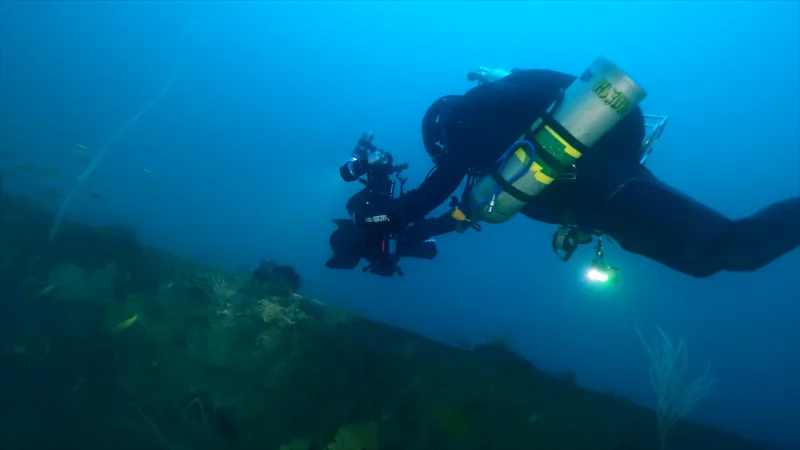
The ship’s wreck now sits off the Philippine coast, where researchers say it was found about 30 nautical miles south of the location long thought to be correct. The wreck is covered in silt and has become home to fish and soft coral. Even so, the site remains identifiable as the ship that carried hundreds of exhausted prisoners to their deaths.
How It Was Identified
The breakthrough came through modern archival work and underwater survey. Researchers searching for the final resting place of U.S. Navy pilot Lt. John F. Thompson and his missing Grumman F6F Hellcat examined Japanese records and found an after-action report that pointed to the Hōfuku Maru’s true sinking position.
That document proved crucial because wartime records were often incomplete or destroyed, and Allied strike reports gave only rough locations. The team then compared side-scan sonar maps, underwater photographs, shipyard plans, and bomb-damage patterns. Those separate lines of evidence all matched, confirming the wreck’s identity.
The Ship’s Final Voyage
By the time prisoners were loaded aboard, many had already survived years of captivity in Japanese camps and, in many cases, the ordeal of building the Thai-Burma Railway. Survivors’ accounts describe conditions so cramped and filthy that disease spread quickly, with dysentery, vomiting, and severe overcrowding common.
The ship was attacked on 21 September 1944 and sank fast after being hit by bombs and torpedoes. The source account says about 800 of the 1,140 prisoners aboard died. Later testimony from survivors also recalled how, in similar sinkings, Japanese crew and even livestock were rescued ahead of prisoners, underscoring the brutal logic of the hell-ship system.
Why It Matters Now
The wreck is now regarded as a maritime war grave. The Hellships Memorial Foundation says the site should be protected, and the Cultural Heritage Agency of the Netherlands has also said it should be left undisturbed rather than excavated. For families, that means the dead are no longer lost to rumor and estimate.
Researchers and descendants say the identification creates a place of remembrance and a clearer historical record. The wreck also reminds visitors and scholars how little is widely known about hell ships, despite the scale of the suffering. Today, the Hōfuku Maru stands as both a grave and a document, visible through sonar, photographs, and the scattered evidence of a life erased at sea.